Field Notes from Ecuador II: Balancing Rare Species Protections With Rural Livelihoods

A steady rain drenched us head to toe, and as it neared midnight I started to wonder when we would finally head back to camp. The herpetologists, though, were unconcerned with the elements. They scrambled up and down steep muddy slopes in search of reptile and amphibian specimens. In all likelihood, the fruits of their labor would be the discovery of species completely new to science! When the group finally called it quits for the night, the transect had yielded a half dozen frogs, a plump lizard, and a beautiful, non-venomous false coral snake to be documented and photographed.

By |2022-04-21T10:13:01-06:00April 20th, 2022|Corridors and Crossings, International Connectivity, People, Research|Comments Off on Field Notes from Ecuador II: Balancing Rare Species Protections With Rural Livelihoods

First-ever Asia Transportation Ecology Forum Was Co-sponsored by the Center

More than 20 speakers and nearly 200 attendees made history last week as participants in the first-of-its-kind gathering to share knowledge for making transportation infrastructure more sustainable across Asia. As many countries in the region expand their networks of roads, rails, and other modes of transportation, such development can provide vast economic and social benefits but also present challenges to nature conservation and local communities. Therefore, on December 16-17, 2021, the 1st Asia Transportation Ecology Forum was held to explore how this development is already impacting ecosystems—affecting species from butterflies to elephants—and how science-based solutions can be applied to conserve Asia’s rich biodiversity. 

By |2022-01-06T12:08:53-07:00December 22nd, 2021|Corridors and Crossings, Events, International Connectivity|Comments Off on First-ever Asia Transportation Ecology Forum Was Co-sponsored by the Center

New Report: Experts Say Roads, Rails, and Canals are Threatening Asian Elephant Survival

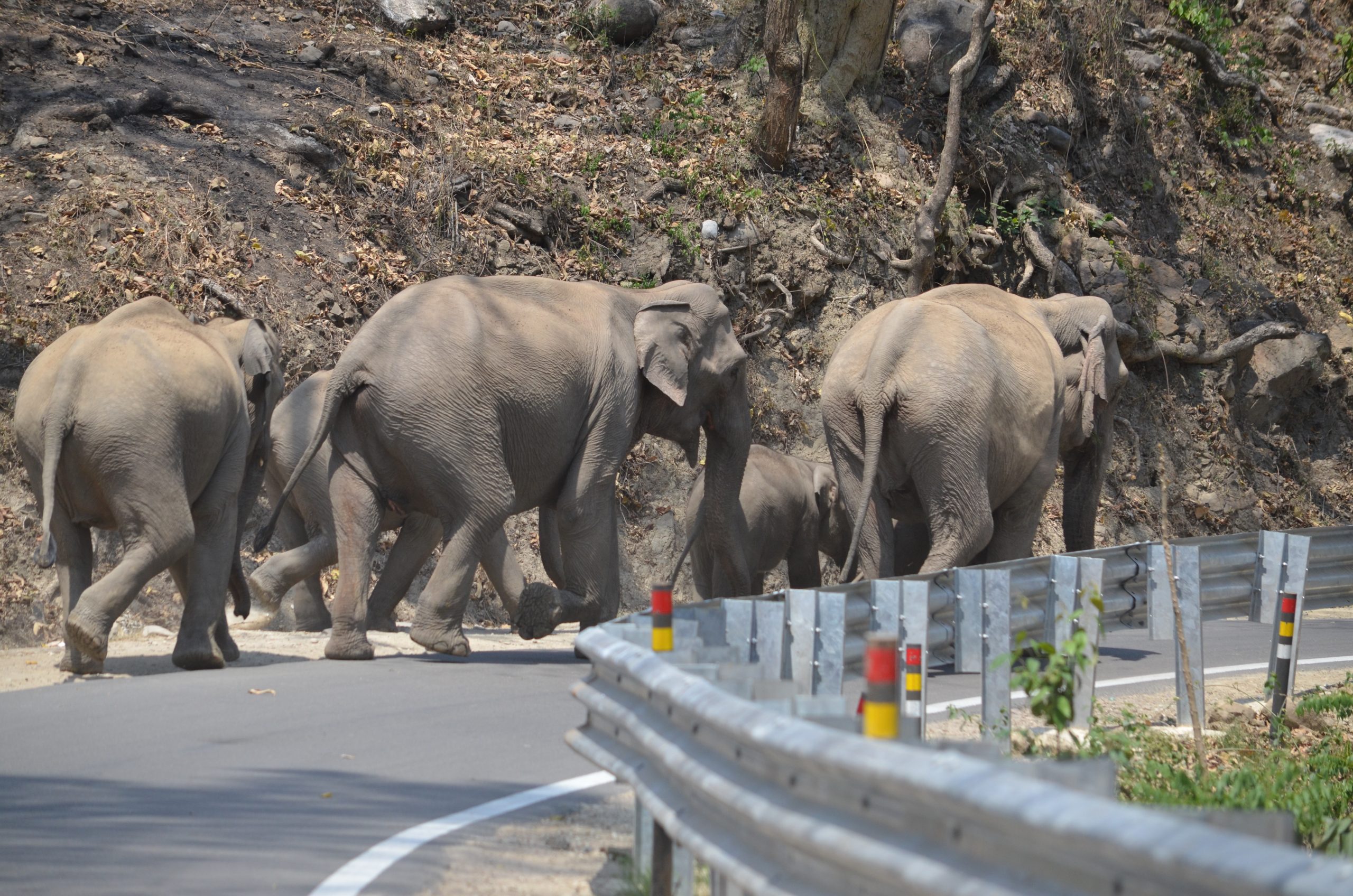
An international group of more than 25 elephant biologists and infrastructure ecologists released a report today with an urgent message: All efforts to avoid key Asian elephant habitats and their migration corridors need to be made when developing linear infrastructure like roads, railways, and canals. If this is not possible, wildlife crossings are key to providing safe passage for this endangered species. The report comes in response to an explosion of new linear infrastructure across Asia that is increasingly blocking elephant movement and leading to deadly collisions.

By |2022-05-30T13:33:30-06:00December 8th, 2021|Corridors and Crossings, International Connectivity, Networks We Host, News and Updates, Press Releases, Research|Comments Off on New Report: Experts Say Roads, Rails, and Canals are Threatening Asian Elephant Survival

Center Completes USAID-funded Project to Advance Wildlife-Friendly Linear Infrastructure in Asia

Asia is home to many iconic wildlife species—such as Asian elephants, Bengal tigers, and Sumatran orangutans—along with some of the world’s richest biodiversity and most complex ecosystems. Yet, as Asia experiences unprecedented economic growth, the region’s natural heritage is threatened by the rapid expansion of linear infrastructure like roads, railways, and power lines. That’s why, over the last 14 months, the nonprofit Center for Large Landscape Conservation has helped USAID build a knowledge base to support Asian countries in planning wildlife-friendly linear infrastructure.

By |2022-05-30T13:34:28-06:00October 25th, 2021|Corridors and Crossings, International Connectivity, News and Updates, Press Releases, Research|Comments Off on Center Completes USAID-funded Project to Advance Wildlife-Friendly Linear Infrastructure in Asia

Citizen Scientists Collect Wildlife Data with Smartphone App

Roads can have many negative impacts on our natural world. Road ecologists study both the effects of roads on wildlife—such as roadkill and habitat fragmentation—and how to reduce these impacts. However, road ecologists can’t identify problem areas or develop solutions without a strong baseline of information on where and when animals attempt to cross roads or are struck by vehicles. Fortunately, new technology has created an opportunity for the public to help collect this data, and the Center is making this tool widely available.

By |2022-01-27T10:46:42-07:00July 15th, 2021|Uncategorized|Comments Off on Citizen Scientists Collect Wildlife Data with Smartphone App

Protecting Asian Elephant Movement in 13 Countries

It is estimated that fewer than 52,000 Asian elephants remain in the wild. Currently listed as “endangered” on the IUCN Red List, Asian elephants thrive when they have the freedom to follow their traditional movement routes to access food, water, and mates. However, herds across South and Southeast Asia are declining due to habitat loss and fragmentation, which prevent them from meeting their life cycle needs. In response, the Center is supporting the work of infrastructure ecologists and elephant biologists to help maintain the ability of elephants to move across landscapes.

By |2021-12-08T10:46:29-07:00July 14th, 2021|Uncategorized|Comments Off on Protecting Asian Elephant Movement in 13 Countries

Landmark Legislation to Protect Wildlife Corridors Passes U.S. House of Representatives

Marking a significant step for wildlife conservation, the Wildlife Corridors Conservation Act along with $400 million for projects to reduce wildlife-vehicle collisions, passed the United States House of Representatives as part of H.R. 3684, the INVEST in America Act. These important provisions will safeguard biodiversity while helping stimulate the U.S. economy, mitigate climate impacts, and reduce highway fatalities.

By |2022-05-30T13:34:56-06:00July 2nd, 2021|Corridors and Crossings, Law, News and Updates, Policy, Press Releases|Comments Off on Landmark Legislation to Protect Wildlife Corridors Passes U.S. House of Representatives

Colorado Joins Wave of States Protecting Wildlife Corridors

Colorado residents and millions of annual visitors alike enjoy the state’s dramatic landscapes, abundant recreation opportunities, and iconic wildlife. So it’s not surprising that Colorado recently became the latest state to pass legislation to safeguard habitat connectivity and wildlife corridors, which are essential for healthy ecosystems. Protecting the ability of wildlife to move freely across the landscape is a win-win-win: it allows animals to meet their needs, enhances driver safety, and supports recreation opportunities for hunters, anglers, and wildlife viewers.

By |2021-06-30T13:58:17-06:00June 30th, 2021|Corridors and Crossings, News and Updates, Policy|Comments Off on Colorado Joins Wave of States Protecting Wildlife Corridors

New Toolkit Helps Fish & Wildlife Managers Strategize for Landscape Connectivity

State fish and wildlife managers recognize that keeping landscapes connected is an important conservation tool. Yet there is growing evidence that the impacts of climate change are already altering the needs and behaviors of animals, creating new patterns of movement throughout the landscape. Staff from the Center recently contributed to a new toolkit offering guidance on protecting wildlife movement and corridor habitat in the face of a changing climate.

By |2021-06-07T11:21:01-06:00June 7th, 2021|Climate Resilience, Corridors and Crossings, Science|Comments Off on New Toolkit Helps Fish & Wildlife Managers Strategize for Landscape Connectivity

Partnership Spotlight: Wildlife Connect

Wildlife Connect is an exciting new initiative of WWF International, and the Center for Large Landscape Conservation is advising on its development. The partnership aims to create ecologically connected and thus climate-resilient landscapes throughout WWF’s conservation work with a focus on three important and vulnerable landscapes on three continents.

By |2021-10-28T12:05:18-06:00April 16th, 2021|International Connectivity, Networking|Comments Off on Partnership Spotlight: Wildlife Connect
Go to Top